


Igualada
Igualada, a dynamic city
With a wide range of fairs, festivals, and large-scale events, Igualada has earned a reputation as a city that never stops. As the regional capital, it hosts prominent events such as FirAnoia and the Mercat d'Antiguitats (Antiques Market ), as well as innovative initiatives like Rec.0 Experimental Stores, which temporarily transforms the old Rec neighborhood twice a year.
For four days, the old factories and tanneries are transformed into pop-up fashion boutiques, where renowned brands offer their stock and samples at very competitive prices. In the culinary sphere, highlights include the Vadefoodies festival and the Gastronomic Day of Les Plantes Oblidades, while in the sporting arena, top-level events such as the Volcat BTT and the European Balloon Festival, the leading hot air balloon festival in Southern Europe, take place.
Igualada, open-air shopping center
A city with deep commercial roots, Igualada grew up around a crossroads that fostered trade and economic dynamism. Today, it maintains this spirit with a vibrant commercial and restaurant scene that is one of the driving forces behind its urban and social development.
Its streets and squares retain a welcoming character, and the unique personality of its establishments makes Igualada an ideal place to stroll and discover corners full of activity and charm.
With an old town full of attractions, a top-notch gastronomic offering and a remarkable concentration of factory outlets, Igualada is establishing itself as one of the leading shopping destinations in central Catalonia.
Igualada, a welcoming and sustainable city
Igualada is not only an attractive place to discover, but also a place to establish daily life. It boasts pedestrian-friendly axes that seamlessly connect the different neighborhoods with services, open spaces, and green areas. More than 35,000 trees and 88 plant species provide shade and coolness to those who stroll through its streets, squares, and parks.
The city provides citizens with spaces such as Parc Central and Anella Verda, designed to promote physical activity and bring natural spaces closer to the urban center, with the aim of enhancing the well-being and quality of life of the resident population.
Igualada, a city of celebration and tradition
Igualada keeps alive celebrations with centuries of history that have adapted to modern times without losing their essence. These traditional festivals form a ritual heritage that distinguishes us from other towns and are an inseparable part of our collective identity. Here, the festivities are communal and foster strong citizen participation.
Among this cultural legacy, the following stand out: the Festa de Reis —awarded the Creu de Sant Jordi and recognized as a Popular Festival of Cultural Interest—, the oldest in Catalonia, documented since 1895; the festivitat de Sant Antoni i els Tres Tombs, the oldest in the State (1822), declared a Traditional Festival of National Interest; the Festa del Sant Crist, which commemorates the miracle of the bloody sweat of the 16th century; and the Festa Major de Sant Bartomeu, with origins documented in the 14th century, which still stands out today for its great capacity for evolution and massive participation.
Igualada, a leading cultural capital
Igualada, recognized as the Catalan Capital of Culture in 2022, plays a key role as a cultural driving force within Catalonia. Thanks to an active and diverse network of associations, the city promotes numerous cultural projects each year, each with great artistic value and a distinctive character.
Events such as FineArt Fotografia, the Mostra Igualada —a performing arts fair for children and young people and one of the six strategic fairs of the Generalitat— or the Zoom Festival, dedicated to audiovisual content, are outstanding examples that have placed Igualada on the cultural map at a national level.
Facilities such as the Museu de la Pell, the Museu del Traginer – Col·lecció Antoni Ros, the Railhome – Museu del Tren en Miniatura, the Teatre Municipal Ateneu or the Sala Municipal d'Exposicions reflect this cultural effervescence and consolidate the city as an essential destination for those who enjoy art, history and culture in all its forms.
The Museu del Traginer (Museum of the Muleteer) offers a glimpse into the evolution of animal-drawn transport for goods and people, as well as the trades, tools, carts, and carriages associated with the world of muleteers. Meanwhile, Railhome provides a unique experience focused on the history of railways and model railroading, with a remarkable collection of miniature trains, scale models, and antique railway artifacts.
Igualada, crossroads
Igualada is a meeting point for two major historical and spiritual routes: the Way of St. James and the Way of St. Ignatius. These itineraries, traveled for centuries by pilgrims and walkers, converge in the city, making it an ideal place to pause, rest, and discover its heritage.
The Catalan variant of the Camino de Santiago crosses Igualada from east to west, following the route of the old Royal Road. The city connects the stages coming from Montserrat with those continuing towards Cervera and, later, towards Aragon and Santiago de Compostela.
The Camí Ignasià recreates the journey that Ignatius of Loyola made in 1522 from his homeland in the Basque Country to Manresa. Igualada is a key stop on the final stretch of the route and connects the stages of Cervera, Montserrat, and Manresa.
The city offers services, accommodation, and welcoming spaces for pilgrims, hikers, and cultural tourism enthusiasts. At Cal Maco, the Centre d'Interpretació del Camí Ignasià (Interpretation Centre of the Ignatian Way) allows visitors to delve deeper into Saint Ignatius's passage through Igualada and the city's historical role as a crossroads of paths and cultures.
Places of interest
Plaça de l'Ajuntament
Located in the heart of the old town, Plaça de l'Ajuntament is one of Igualada's most emblematic spaces. With the characteristic style of Catalan arcaded squares, it remains the city's institutional center, presided over by the Ajuntament, a neoclassical building inaugurated in 1883.
The surrounding area features heritage buildings, historic shops, and terraces that enliven a space where daily life, heritage, and major public celebrations coexist. It is a regular venue for institutional events and community gatherings.
From this square, you can explore the historic center and discover points of interest such as the Church of Santa Maria, Carrer de l'Argent, and the remains of the medieval wall. It's a great starting point for exploring Igualada through its guided tours.
Basilica of Santa Maria
The main parish church of the city, the Basilica of Santa Maria is one of Igualada's great landmarks. Designed by the Renaissance architect Pere Blai, the building reflects the origins and historical evolution of the city.
The original chapel of Sant Pere i Santa Maria, documented in 1002, gave rise to a church that houses a remarkable altarpiece, a transitional work between the Baroque and Neoclassical styles, by Josep Sunyer. Also noteworthy are the inn chapel of Sant Crist, with paintings by Francesc Tramullas, and the Modernist baptistery designed by Ignasi Colomer.
The Walls
Igualada has over a thousand years of history and was soon surrounded by walls for protection. Although few visible remains exist today, these defensive structures have shaped the urban layout of the old town.
Built in three stages, the 15th-century walls boasted 36 towers, 7 gates, and a double moat. Remnants such as the Portal d'en Vives and the Portal de la Font Major are still preserved today.
Want to discover what they were like and what remains of them? Join the Igualada Medieval guided tour and explore the ancient city limits.
Les Rambles
North of the Nucli Antic, the Rambles d'Igualada follow the old route of the Royal Road and form one of the city's busiest and most emblematic areas. They are made up of four streets: the Rambla General Vives, the Rambla de Sant Isidre (the oldest), the Rambla Nova, and the Rambla de Sant Ferran.
The route begins in Plaça del Rei and goes to Plaça Castells, where the building of the old Sant Agustí convent stands out.
Modernism
With the arrival of the railway and the industrial boom, Modernism entered Igualada as a reflection of a time of profound social and economic change. It is no coincidence that the first Modernist buildings were the train station and the Cercle Mercantil i Industrial, true symbols of the emerging modernity.
From then on, the style spread throughout the city. More than a hundred Modernist buildings, or buildings with elements of this style, are now part of Igualada's urban landscape. Some of the most outstanding are:
- Ca la Mamita: glazed ceramics and a central tower that make it unmistakable.
- Agència Ollé: an explosion of colors and textures in the heart of Rambla Sant Isidre.
- Cal Poncell: brick and green ceramic at the service of an elegant and urban modernism.
- Cal Ratés: tower and gargoyles within the historic center, with a surprising rear facade.
- Ateneu Igualadí: cultural center with modernist headquarters renovated in 1910.
- Escorxador: an example of industrial modernism, functional and aesthetic at the same time.
- Llar del Sant Crist: postmodernism influenced by Gaudin, the work of Joan Rubió i Bellver.
The Rec neighborhood
Located south of the old town, the Rec district is one of the great icons of Catalan industrial heritage and an essential site for understanding the economic and social history of Igualada. The district developed around an irrigation canal approximately two and a half kilometers long that draws water from the Anoia River. Built in the High Middle Ages, it initially served to power mills and irrigate orchards, and from the 18th century onwards, it became a vital element for supplying water to the numerous tanneries and dye works that were established in the area.
Tanneries, textile factories, chimneys, and buildings of great architectural value create a unique industrial landscape. Elements such as buttresses, walkways, bagants (a type of platform), vats, and boixarreres (a type of frame) explain the traditional workings of the tanneries and give the neighborhood its distinctive character.
Today, the Rec district remains a vibrant and evolving neighborhood, where industrial activity coexists with cultural, creative, and commercial initiatives. Strolling through its streets reveals centuries of tanning tradition and some of the most representative sites of Igualada's industrial past, such as the Leather Museum, the old tanneries, and the preserved sections of the Rec canal.
Parc Central
Located on the northern side of Avinguda Mestre Muntaner, Parc Central is one of the city's main green spaces and recreational areas. It houses Camp de Vol—the venue for the European Balloon Festival—a modern skate park, and two pump tracks, ideal for thrill-seekers.
The park also includes the Biollac, a natural space with ecological value and educational function, and a large children's playground designed for the enjoyment of the little ones.
Next to the park you can admire two outstanding works of contemporary Catalan architecture: l'antiga fàbrica Vives Vidal SA and l'església de la Sagrada Família.
The Verdaguer Passage
At 1,540 meters long, Passeig Verdaguer is the longest straight promenade in Catalonia. Initially known as Passeig de la Alameda (1834), it marked the northern boundary of Igualada until 1925 and was closed off by the Ferrocarrils Catalans railway line until 1977.
Along the promenade, we find Modernist buildings like Cal Poncell and Noucentista buildings like Cal Maurici, as well as traces of the city's industrial past. A unique feature is the Cal Pasqual gas generator, comprised of the factory's old engine, boiler, and chimney. Installed after the Spanish Civil War, it was used to generate producer gas for the looms.
It is the only example of its kind preserved in Catalonia and, probably, in Europe. The walk culminates in the Parc de l'Estació Vella, a green space and venue for concerts, fairs, and civic celebrations.
Green Ring
The Anella Verda is a circular route of over 13 km that surrounds Igualada and connects various natural, agricultural, and scenic areas in its immediate vicinity. Designed to promote a healthy lifestyle and respect for the environment, it is perfect for sports, walks, or enjoying time with the family.
Along the route you can enjoy privileged views of the city and its surroundings, as well as connections with routes such as the Camí de Sant Jaume, the Via Blava or the Camí Ignasià.
Via Blava Anoia
The Via Blava Anoia is part of the Vies Blaves Barcelona project, a network of over 250 km that follows the courses of the Llobregat, Cardener, and Anoia rivers. This route follows the Anoia River, from Jorba to Martorell, and offers a peaceful and accessible way to discover river landscapes, natural areas, and heritage sites.
As it passes through Igualada, the route allows you to rediscover the city from a new perspective, connecting with places like the Rec neighborhood, the Leather Museum or the Green Ring.
Cal Maco
Located in the heart of Igualada, Cal Maco is a modernist building that houses the city and region's Tourist Office, the Interpretation Centre of the Camino Ignasià, and a pilgrim hostel. The centre offers a glimpse into Saint Ignatius's passage through Igualada and provides an understanding of what the city was like in the 16th century.
One of its most striking features is the faithful recreation of pilgrim attire. In addition to its educational function, Cal Maco offers modern and comfortable accommodation for both pilgrims and travelers wishing to explore the city and its surroundings.
It is, without a doubt, an ideal gateway to begin to get to know Igualada, its history and its role as a crossroads of paths and cultures.

Experiences
Events
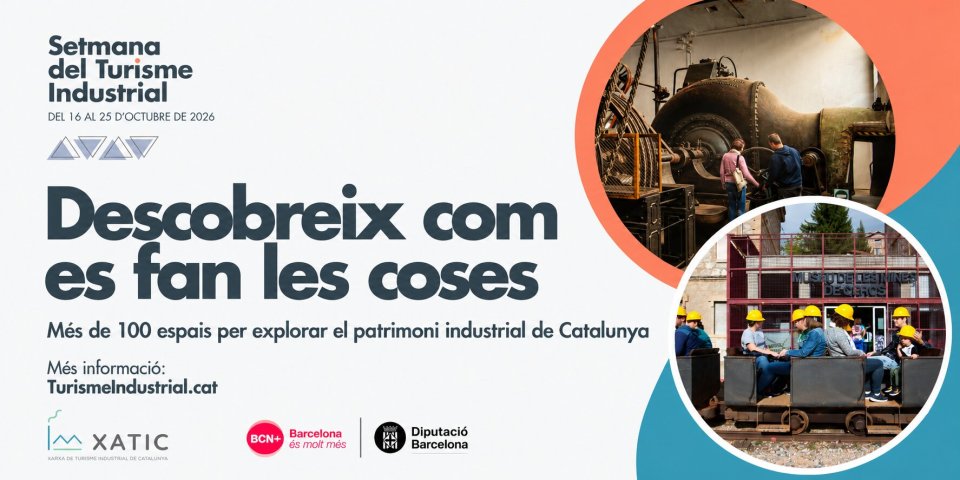
Catalonia Industrial Tourism Week 2026
From 16 to 25 OctoberSostibaix, the sustainable fortnight of Baix Llobregat
From 15 October to 1 NovemberSample of High Altitude Wines from La Llacuna
From 17 to 18 October"El Nostre Festival" - Llet Nostra
18 OctoberPiera International Music Festival and Els Hostalets de Pierola
18 OctoberAntiques Market and Craft Fair in Igualada
25 OctoberMototerra in Els Hostalets de Pierola
1 NovemberMost, International Wine Film Festival in Penedès and Priorat
From 5 to 15 NovemberNearby routes
The paper path for Catalonia
The leather path in Igualada
The Ignatian Way
Camino de Santiago: from Sant Esteve d'en Bas in Cervera
The river road in the Alt Penedès
The battles of 1714
Montserrat, symbol of Catalonia
Paradise Forest in La Llacuna
Puig Castellar Ancosa route in La Llacuna
Route through the castle of Vilademager and the Fountain of the Plan Novell in La Llacuna
News








 Sustainable turism
 Biosphere